Best Pool Cleaning Robots
Manual pool vacuuming is a 45-minute job that most people do on
weekends when they’d rather be swimming. A robotic pool cleaner does the
same job while you’re at work, without complaining about it. For an
outdoor appliance that costs $300–$1,500, the math is usually fine.
What most buyers get wrong: they buy a robot that cleans the floor
and nothing else, then wonder why the waterline is still dirty and
leaves keep accumulating on the surface. A complete pool cleaning setup
needs robots — or one capable robot — that handles all three zones:
below the surface (floor and walls), the waterline, and the surface
itself. This guide covers what to buy for each zone and how to tie it
into a smart home setup.
Pool Cleaning
Robots: What Each Type Actually Does
Robotic pool cleaners split into two categories based on where they
operate. Understanding the difference before buying saves you from a
robot that handles half the job and leaves you still dragging a net
around.
Underwater Pool
Cleaning Robots (Floor + Walls)
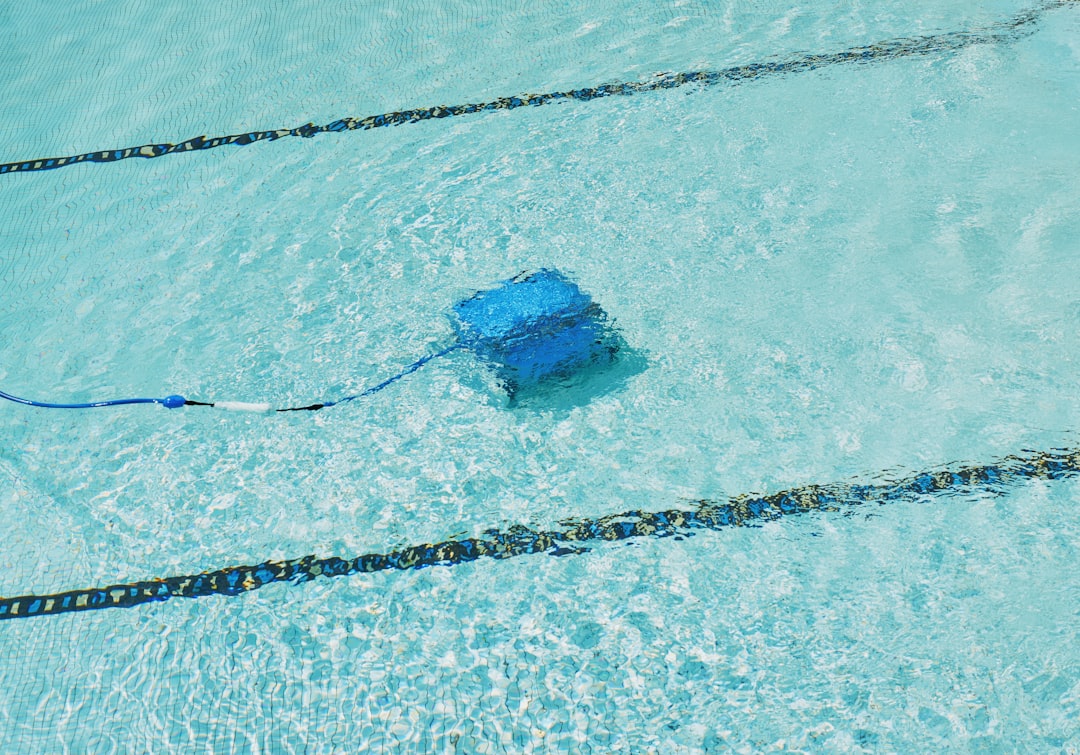
The bulk of pool debris — algae, sediment, sand, leaves that sank —
lives on the floor and lower walls. Underwater robotic pool cleaners are
self-contained units with their own motors and filtration. They don’t
connect to your pool pump; they plug into a standard outdoor outlet,
drop in the water, and drive themselves around on a programmed cleaning
pattern.
This is where the Dolphin brand — made by Maytronics — dominates.
They make the most widely used and well-reviewed underwater pool
cleaning robots across every price tier.
Dolphin Nautilus CC
Plus — the best-selling robotic pool cleaner on Amazon for
years running. Cleans floor and walls up to 50 ft pools, two-hour
cleaning cycle, top-load filter basket that’s easy to empty. At
$500–$600 it’s the starting point for anyone serious about automating
pool cleaning. The “CC Plus” designation means it has Wi-Fi — you can
schedule cleaning cycles from the Dolphin app and get cleaning status
notifications on your phone.
Dolphin Sigma
— the step-up model at $800–$900. Adds full waterline scrubbing (the
rubber roller reaches the tile line), obstacle detection, and a larger
filter capacity. The best all-in-one option if you don’t want a separate
surface cleaner. The Sigma is the one worth buying if your pool has tile
at the waterline that collects calcium and algae — the floor-only models
won’t touch it.
Dolphin
Premier — top of the Dolphin range at $1,000–$1,200.
Multiple filter options (fine, ultra-fine, mesh), cleans floor, walls,
and waterline, scrubbing brushes specifically for algae. For larger
pools (up to 50 ft) or pools that sit in a heavily wooded area with
constant debris.
Dolphin E10 —
the budget entry at $300–$350. Floor-only, no wall or waterline
coverage, basic pattern cleaning. Fine for smaller above-ground pools or
as a first robotic cleaner for a low-debris pool. Don’t expect it to
replace manual cleaning for a 40 ft in-ground pool.
For large pools or commercial settings: the Dolphin Nautilus CC Supreme
extends to 60 ft coverage and adds a swivel cord that prevents tangling
on long runs.
Surface Pool
Cleaning Robots (Leaves + Debris)
Underwater robots don’t touch what’s floating on top. Leaves, pollen,
insects, and sunscreen film all accumulate on the surface and need a
different kind of device. Surface pool cleaners work in two ways:
skimmer robots that collect floating debris, and surface scanners that
run a pattern across the water’s surface.
Solar Breeze
NX2 — the original solar-powered surface skimmer. Runs
entirely on solar power, no outlet needed, collects floating debris in
an onboard tray. It operates autonomously — charge by day, keep skimming
throughout the day. At $600, it’s not cheap, but it eliminates the need
to run your pool pump 8–10 hours a day to skim. The downside: it’s slow
and won’t handle heavy leaf fall. For light debris pools in sunny
climates, it’s excellent.
Betta SE Solar Powered
Automatic Pool Skimmer — a more affordable solar skimmer at
$200–$250. Smaller collection basket, works best for pools under 30 ft.
It handles pollen and fine debris well. For heavy leaf loads it fills up
quickly and needs daily emptying — which defeats the automation purpose.
Best for maintenance mode after a big clean, not primary surface
collection.
Polaris Sport Robotic Pool
Cleaner — a hybrid option at $500–$600 that cleans floor
and has a large debris bag designed to handle heavier leaf loads than
pure floor robots. Better for pools near trees than a standard
Dolphin.
Smart Home
Integration for Pool Cleaning Robots
Most pool cleaning robots are standalone devices — you drop them in,
they run, you pull them out. But the higher-end models and supporting
smart home devices let you build real automations around your pool.
Wi-Fi Control and
Scheduling (Built-In)
The Dolphin Nautilus CC Plus and Sigma both include Wi-Fi and a
companion app. From the app you can: – Schedule cleaning cycles by day
and time – Start or stop a cleaning cycle remotely – Receive
notifications when cleaning is complete – Track cycle history
This is useful on its own but doesn’t integrate with Home Assistant
or other smart home platforms natively. Dolphin’s API is closed and
there’s no official Home Assistant integration as of 2026. Community
integrations exist but are fragile — use the Dolphin app for scheduling
rather than forcing it into your automation platform.
Smart Plugs for
Scheduling (Easy Automation)
The simplest and most reliable automation for any pool cleaning robot
is a smart plug. Plug the robot’s power supply into a Kasa EP25 smart plug ($15–20) and
control power from Home Assistant or Alexa. This gives you:
- Scheduled power-on/off via your home automation platform
- Energy monitoring (track how much the robot actually draws)
- Voice control: “Alexa, start the pool robot”
- Automations: only power on after 8am, cut off at sunset, disable if
it’s raining via a weather integration
It’s a $15 workaround that makes any pool robot smart-home-compatible
regardless of whether the robot itself has a Wi-Fi module.
Pool Pump Integration
Pool pump automation is the bigger smart home opportunity around pool
cleaning. Smart pool controllers from Pentair
and Hayward
replace your manual pool timer and expose pump speed, filter mode, and
schedule to app control and, via community integrations, to Home
Assistant. Automating your pump and your robot together — run the pump
first to circulate, then trigger the robot — is a more complete approach
than either device alone.
Automation Ideas for Pool
Cleaning
- Run the robot on a schedule —
Tuesday/Thursday/Saturday mornings at 7am via smart plug timer. Pulls
out and charges while you have your coffee. - Surface skimmer always-on — solar skimmers don’t
need a schedule, but a smart plug lets you disable them in storms or
when chemicals are dosing. - Notify when the robot is done — Wi-Fi-enabled
Dolphins send app notifications natively. For non-Wi-Fi models, a smart
plug with energy monitoring can detect when the robot’s draw drops to
near-zero (cycle complete) and send a Home Assistant notification. - Weather gate — use a weather integration to skip
the robot run if it rained heavily overnight (debris load will be higher
than a quick clean handles — better to do a manual full clean after a
storm).
What Nobody Tells You
Before You Buy
A few things that come up after the purchase that nobody puts in the
product listing:
The cord is always a problem. Every underwater
robotic pool cleaner uses a floating cable — typically 40–60 ft — that
drapes across the water while the robot works. On small pools this is
fine. On larger pools, the cable tangles around the robot on second and
third passes. The Dolphin Nautilus CC Supreme uses a swivel cord that
helps considerably. If you have a 40+ ft pool and you’re not getting the
swivel model, plan on occasionally having to untangle.
Filter cleaning is the maintenance. The actual robot
requires almost no maintenance other than emptying and rinsing the
filter basket after each use. Skip this and the filter clogs, suction
drops, and the robot starts missing sections of the floor. Takes 2
minutes. Do it every time you pull the robot out.
Robots don’t replace your pump and skimmer. The
robot filters the floor and walls. Your pool pump and skimmer handle
water chemistry and surface turnover. You still need to run the pump —
robotic cleaners supplement it, not replace it. The win is that you run
the pump for chemistry circulation (4–6 hours) rather than for cleaning
(8–10 hours), which saves on electricity.
Chemical balance affects robot life. Running a robot
in water with extreme pH or high chlorine levels will degrade the rubber
brushes and plastic housing faster than normal. Keep your water balanced
— the robot lasts longer and cleans better.
Above-ground vs in-ground matters. Most of the
Dolphin models mentioned here are designed for in-ground pools with
smooth plaster, pebble, or tile surfaces. Above-ground pools with vinyl
liners need a robot with softer brush options — the standard brushes
that work on plaster will scratch or tear vinyl. The Dolphin E10 and the
Dolphin Escape are specifically
designed for above-ground/vinyl pools.
Where to store the robot. Don’t leave it in the pool
when not in use. UV exposure degrades the housing and the brushes. Most
robotic cleaners come with a caddy for storage out of direct sun. Use
it.
Power consumption is low. A typical 150–200W robot
running a 2-hour cycle uses about 0.3–0.4 kWh per session. At average US
electricity rates that’s roughly 4–5 cents a session. Running it 3x a
week costs about $7/year in electricity. It is not a meaningful power
draw.
What to Buy Based on Your
Pool
Small above-ground pool (under 24 ft): Dolphin E10 ($300) + Betta SE skimmer ($200). Budget
setup, handles the basics.
Mid-size in-ground pool (25–40 ft), light tree
coverage: Dolphin Nautilus CC
Plus ($550) + Solar Breeze NX2
($600) for surface. Full above-and-below-surface coverage, Wi-Fi
scheduling on the Dolphin.
Mid-size in-ground, tile waterline, wants one robot:
Dolphin Sigma ($850). Handles
floor, walls, and waterline. Add a solar skimmer for surface debris.
Large pool (40–60 ft) or heavy leaf load: Dolphin Nautilus CC Supreme ($900+)
for the longer cord reach and larger debris capacity. Add the Polaris Sport if leaf load is
heavy.
For more on automating outdoor devices, see our robot
vacuums home automation guide and Home
Assistant getting started guide. For the smart home platform that
ties everything together, see our best smart home
hub comparison.
Frequently Asked Questions
Do robotic pool cleaners clean the walls and waterline
too? It depends on the model. Entry-level robots like the
Dolphin E10 clean the floor only. Mid-range models like the Dolphin
Nautilus CC Plus clean the floor and lower walls. The Dolphin Sigma and
Premier add waterline scrubbing. If your tile line accumulates calcium
or algae, make sure the model you buy specifically states waterline
coverage.
Can pool cleaning robots be integrated with Home
Assistant? Not directly via an official integration in 2026.
Dolphin’s app works via their cloud API with no official Home Assistant
support. The practical workaround is a smart plug with energy monitoring
— gives you scheduling and completion detection via any home automation
platform. Pentair and Hayward smart pool controllers have community Home
Assistant integrations that control the pump and filtration.
How long does a robotic pool cleaner take to clean a
pool? Most models are designed for 2–3 hour cleaning cycles for
a standard 30–50 ft pool. The Dolphin app lets you select “quick clean”
(1 hour) or “standard” cycles. Run it overnight or in the early morning
and the pool is ready before you use it.
What’s the difference between a robotic pool cleaner and a
suction-side or pressure-side cleaner? Robotic cleaners are
self-contained — they have their own pump and filter and plug into an
outlet. Suction-side cleaners (like Polaris 65) connect to your skimmer
line and use the pool pump’s suction to move. Pressure-side cleaners use
return-line pressure. Robotic cleaners are more efficient, don’t strain
your pool pump, and filter independently. They cost more upfront but
save on pump energy costs and filter wear over time.
Are solar pool skimmers worth it? For pools in sunny
climates with light debris, yes — the Solar Breeze NX2 runs all day on
solar with no operating cost and significantly reduces how long you need
to run your pump for skimming. In areas with lots of tree coverage or
heavy seasonal leaf fall, a solar skimmer fills too quickly to be
practical as a primary surface cleaner.
How often should pool cleaning robots run? For a
pool in regular use, 2–3 times per week is typical. High-use pools or
pools near trees may need daily runs. The nice thing about robotic
cleaners is that running them more often doesn’t cost much — the energy
draw is low (150–200W for most models) and the filter is easy to
rinse.