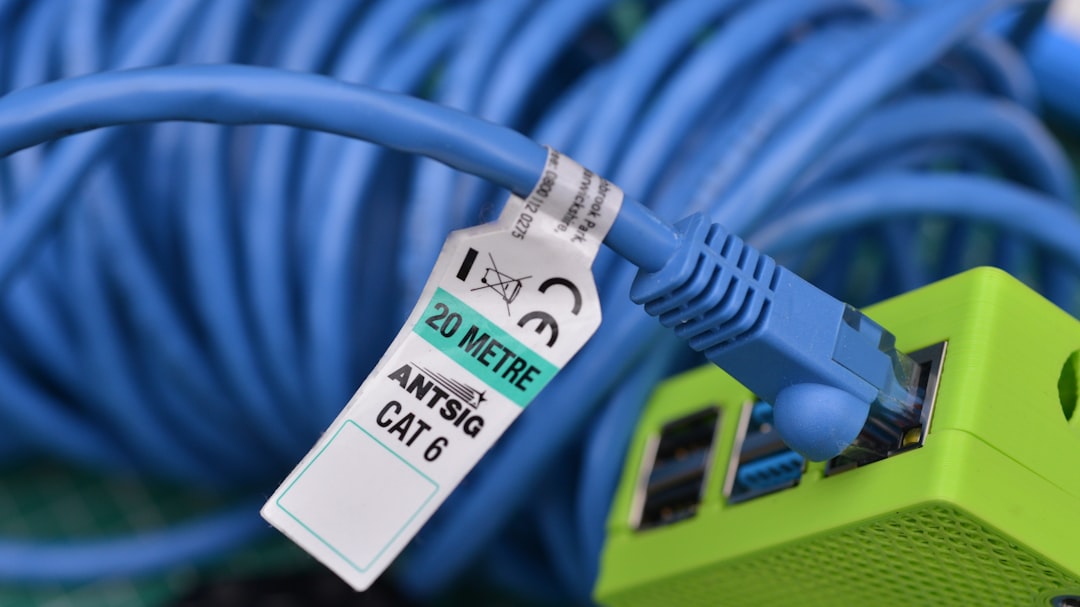
Cat6 vs Cat6A Ethernet Cables: Which Should You Install?
When running structured network wiring through walls, attics, and crawlspaces, choosing the correct cable standard is one of the most critical infrastructure decisions you will make. While Wi-Fi standards evolve every few years, high-quality copper cabling installed inside your walls is expected to remain in place for fifteen to twenty years. For most homeowners building or upgrading a home network today, the debate comes down to Cat6 vs Cat6A.
Both cable standards deliver reliable multi-gigabit performance, but they differ significantly in operating frequency, maximum transmission distance for 10-Gigabit speeds, physical cable diameter, and termination complexity.
In this comprehensive head-to-head comparison of Cat6 vs Cat6A, we examine the technical specifications, real-world installation challenges, Power over Ethernet (PoE) thermals, and cost differences to help you determine the best copper standard for your home wiring project.
Head-to-Head Specification Comparison
Understanding the engineering specifications behind each standard reveals why their performance diverges over extended distances and higher frequencies in the Cat6 vs Cat6A comparison.
| Specification | Category 6 (Cat6) | Category 6A (Cat6A Augmented) |
|---|---|---|
| Max Bandwidth / Frequency | 250 MHz | 500 MHz |
| Max Data Rate (10GBASE-T) | 10 Gbps (up to 37–55 meters / 121–180 ft) | 10 Gbps (full 100 meters / 328 ft) |
| Standard Data Rate (1G/2.5G/5G) | 1/2.5/5 Gbps (full 100 meters / 328 ft) | 1/2.5/5 Gbps (full 100 meters / 328 ft) |
| Alien Crosstalk (ANEXT) Resistance | Moderate | Exceptional (Internal spline / Shielding) |
| Conductor Gauge | Typically 23 to 24 AWG | Typically 23 AWG (Thicker copper core) |
| Outer Cable Diameter | ~5.5 mm to 6.2 mm | ~7.0 mm to 8.5 mm |
| Minimum Bend Radius | 4x Outer Diameter (~1 inch) | 4x to 8x Outer Diameter (~1.5 to 2 inches) |
| Termination Difficulty | Easy (Standard RJ45 plugs & keystones) | Moderate to Advanced (Stiff conductors / Grounding) |
| Relative Material Cost | Baseline ($) | 25% to 40% Higher ($$) |
Detailed historical context on twisted pair development is available on the Category 6 cable reference and the foundational Ethernet over twisted pair overview.
Bandwidth and 10-Gigabit Distance Limits
The most notable technical difference in the Cat6 vs Cat6A matchup is how each cable handles high-frequency signaling for 10GBASE-T networks.
Cat6 Distance Constraints at 10Gbps
Standard Cat6 is certified up to 250 MHz. While Cat6 was originally engineered for 1-Gigabit (1000BASE-T) networking, it can successfully transmit 10-Gigabit Ethernet up to 55 meters (180 feet) under ideal conditions with low electrical interference. However, in environments with high cable bundle density, alien crosstalk between adjacent unshielded lines can degrade signal integrity, reducing the reliable 10Gbps distance to 37 meters (121 feet) or forcing link negotiation down to 5Gbps or 2.5Gbps.
Cat6A Full-Length 10Gbps Certification
Cat6A (where the “A” stands for Augmented) doubles the operating frequency to 500 MHz. This expanded bandwidth allows Cat6A to support full 10-Gigabit speeds across the entire 100-meter (328-foot) channel length specified by TIA/EIA standards, regardless of alien crosstalk or tight bundling in cable trays. If you have long cable runs stretching from a central basement rack to a detached workshop, attic access point, or second-story media server, Cat6A guarantees full 10Gbps throughput without performance degradation.
Shielding Types: UTP vs F/UTP and S/FTP
When evaluating Cat6 vs Cat6A shielding configurations, both standards are manufactured in several structural variations, which affect noise immunity, cable thickness, and grounding requirements:
- UTP (Unshielded Twisted Pair): Contains no metallic foil shields. UTP Cat6 relies on internal pair twisting and a central plastic spline (cross-filler) to minimize internal crosstalk. It is lightweight, flexible, and simple to pull through stud holes.
- F/UTP (Foiled with Unshielded Twisted Pairs): Features an overall aluminum foil screen wrapped around all four unshielded pairs, plus a bare copper drain wire. This shielding deflects electromagnetic interference (EMI) from nearby AC power lines and eliminates alien crosstalk.
- S/FTP (Shielded with Foiled Twisted Pairs): Each individual twisted pair is wrapped in foil, surrounded by an outer braided wire mesh. This provides ultimate protection against industrial machinery and radio frequency interference (RFI), but results in a very stiff, heavy cable.
When selecting shielded cables, remember that all shielded runs must be bonded to a grounded patch panel at your central rack. If a shielded line is left floating without proper grounding, the outer foil can act as an antenna, increasing background noise instead of suppressing it.
Learn about connector specifications on the Modular connector reference and technical pinouts.
Recommended Cabling Hardware and Tools
To achieve certified performance from your structured wiring, choose dependable bulk cable, matching keystone jacks, and precision termination tools.
Bulk Shielded Cat6A Cable
💰 Buy on Amazon → Bulk Shielded Cat6A Cable
For permanent in-wall risers and high-bandwidth network drops, solid pure bare copper Cat6A cable delivers certified 500 MHz transmission. Look for 23 AWG solid conductors with a CMP (Plenum) or CMR (Riser) fire-safety jacket rating.
- Conductor: 23 AWG 100% solid bare copper (never copper-clad aluminum)
- Shielding: F/UTP with internal longitudinal spline
- Applications: In-wall backbone drops and 10GbE server interlinks
Cable Matters Cat6A Shielded Keystone Jacks
💰 Buy on Amazon → Cable Matters Cat6A Shielded Keystone Jacks
These die-cast metal shielded keystone jacks provide 360-degree shielding against EMI and eliminate alien crosstalk at termination points. They snap directly into standard wall plates and blank keystone patch panels.
- Design: Tool-free zinc-alloy shielded housing with 180-degree punch-down layout
- Compatibility: Standard keystone wall plates and modular patch panels
- Wiring Standards: T568A and T568B color-coded labeling
Cable Matters Cat6 Keystone Jacks (10-Pack)
💰 Buy on Amazon → Cable Matters Cat6 Keystone Jacks 10-Pack
If you are running standard unshielded Cat6 lines to secondary bedrooms and smart TVs, these 90-degree punch-down jacks offer clean terminations, heavy-duty gold-plated contacts, and compatibility with standard impact punch-down tools.
- Design: High-impact fire-retardant plastic with dual IDC blocks
- Compatibility: 23 and 24 AWG solid Ethernet conductors
- Ideal Use: Fast, clean room drops for residential gigabit networks
Network Cable Tester RJ45
💰 Buy on Amazon → Network Cable Tester RJ45
Never close drywall or rack equipment without verifying pin-to-pin continuity, wire map pairing, and shield ground continuity. A dedicated RJ45 tester detects split pairs, crossed conductors, and open circuits in seconds.
- Functions: Tests continuity, open circuits, crossed pairs, and short circuits
- Interface: Detachable remote unit for testing long runs between rooms
- Essential For: Rapid troubleshooting during multi-room cable pulls
Power over Ethernet (PoE) and Thermal Dissipation
The proliferation of PoE-powered access points, motorized PTZ cameras, smart lighting, and tablet dashboards makes heat dissipation inside cable bundles an essential factor in the Cat6 vs Cat6A decision.
The IEEE 802.3bt (PoE Type 4) standard can deliver up to 90 watts of DC power over four twisted pairs. When dozens of PoE lines are grouped together in tight conduits or vertical wall cavities, electrical resistance produces internal heat buildup.
- Cat6 (23–24 AWG): Experienced moderate temperature rise under heavy PoE loads. Higher bundle temperatures increase signal attenuation, requiring shorter overall cable lengths.
- Cat6A (23 AWG): The thicker copper conductor gauge and wider spacing from internal splines offer lower DC resistance and superior thermal dissipation. Cat6A handles high-wattage 802.3bt PoE delivery with minimal heat rise, preventing premature insulation aging.
Learn more about PoE switches and power budgets in our guide to the Best PoE Switches for Home Networks and the technical Power over Ethernet standards.
Physical Installation: Conduit, Bend Radius, and Workability
While Cat6A offers superior technical headroom, Cat6 holds a distinct practical advantage when pulling wires through tight residential framing.
Cable Thickness and Conduit Fill Ratio
Cat6 typically measures 5.5 to 6.2 mm in diameter, while shielded Cat6A measures between 7.2 and 8.5 mm. That difference may seem small on paper, but in a 3/4-inch or 1-inch flexible conduit, you can comfortably pull three to four Cat6 cables where you might only fit two Cat6A lines before exceeding the National Electrical Code 40% conduit fill limit.
Bend Radius and Gang Box Depth
Cat6A requires a minimum bend radius of roughly four to eight times its outer diameter (up to two inches). Bending stiff Cat6A into shallow electrical boxes behind drywall can be frustrating and risks kinking the internal spline. For smooth terminations:
– Use deep low-voltage mounting brackets rather than standard closed electrical boxes. See our step-by-step tutorial on How to Install Low Voltage Old Work Boxes.
– Use proper punch-down techniques at your rack by following our guide on How to Punch Down and Wire a Network Patch Panel.
– Master shielded modular termination with our dedicated walkthrough on How to Terminate Cat6A Ethernet Cables.
Cost Breakdown: Material and Labor Analysis
When budgeting Cat6 vs Cat6A materials for an average 2,500-square-foot home with 16 to 24 dual Ethernet drops (approximately 1,000 to 1,500 total feet of bulk cable), the price difference breaks down as follows:
| Component | Cat6 UTP Build | Cat6A F/UTP Build |
|---|---|---|
| 1,000 ft Bulk Cable (Pure Copper) | ~$140 – $180 | ~$220 – $300 |
| 24-Port Patch Panel | ~$25 – $35 (Standard IDC) | ~$45 – $65 (Shielded Modular) |
| 24 Keystone Jacks | ~$30 – $45 | ~$70 – $110 (Die-cast shielded) |
| Wall Plates & Patch Cords | ~$40 – $60 | ~$60 – $80 |
| Total Hardware Cost | ~$235 – $320 | ~$395 – $555 |
The absolute material price difference for a typical residential build is roughly $150 to $250. Given that the labor and effort of pulling in-wall cables represents 80% to 90% of the project’s total cost, spending an extra $200 for lifelong 10Gbps peace of mind is often well worth the investment.
The Verdict: When to Choose Cat6 vs Cat6A
To decide which cable standard fits your specific installation goals, evaluate your floor plan layout and performance needs against these criteria:
Choose Cat6 If:
- Your longest individual cable run is under 35 meters (115 feet) from the central switch.
- You are pulling multiple cables through tight 3/4-inch conduits or crowded existing wall cavities.
- You want an easy DIY termination process with standard plastic keystones and modular crimpers.
- You are wiring non-demanding peripheral drops like smart televisions, streaming boxes, printers, and low-power IoT controllers.
Choose Cat6A If:
- You are building a high-performance homelab, local NAS storage cluster, or 10GbE workstation backbone.
- Individual cable runs exceed 40 meters (130 feet) to detached garages, basements, or outbuildings.
- You are powering high-wattage Wi-Fi 7 access points or PTZ security cameras using 60W+ 802.3bt PoE.
- You want the ultimate future-proof foundation that will never require in-wall replacement during your home ownership.
For testing signal integrity and channel performance parameters, consult the diagnostic documentation on Twisted pair testing.
Frequently Asked Questions
Is Cat6A backwards compatible with Cat6 and Cat5e?
Yes. Cat6A utilizes the standard 8P8C (RJ45) connector interface and is 100% backwards compatible with Cat6, Cat5e, and Cat5 equipment. You can plug a Cat6A patch cable into any standard gigabit or fast Ethernet switch port without compatibility issues.
Can Cat6 run 10Gbps speeds in a home?
Yes, standard Cat6 can support 10GBASE-T 10-Gigabit speeds over shorter distances up to 55 meters (180 feet) under clean electrical conditions, and up to 37 meters (121 feet) in bundled environments with higher alien crosstalk. For longer runs or maximum noise immunity, Cat6A is required.
Is shielded Cat6A cable difficult to terminate for beginners?
Shielded Cat6A cable is stiffer and requires a few extra steps compared to standard unshielded Cat6. You must carefully fold back the aluminum foil shield, wrap the bare drain wire around the metal housing, and ensure solid contact with the die-cast metal keystone jack to complete the electrical ground path. Using toolless die-cast keystone jacks simplifies this process considerably.
Does Cat6A reduce latency for online gaming?
No. Latency over local copper Ethernet cabling is determined by physical speed of light propagation and active switch packet processing, which is identical between Cat6 and Cat6A (fractions of a millisecond). Cat6A provides higher bandwidth headroom (500 MHz vs 250 MHz) and eliminates packet retransmissions caused by crosstalk, but it does not alter baseline ping times.
Should I install Cat7 or Cat8 instead of Cat6A?
For residential networking, Cat7 and Cat8 are generally unnecessary. Cat7 is not formally recognized by the TIA/EIA standard, and Cat8 is engineered primarily for short 30-meter switch-to-server top-of-rack links in enterprise data centers. Cat6A remains the optimal standard for whole-home structured cabling.


One Comment
Comments are closed.