Best SFP+ Transceivers & DAC Cables (2026)
Best SFP+ Transceivers and DAC Cables for Home Networks in 2026
Once you’ve committed to 10GbE in your home — whether through a full 10GbE build or a phased 2.5G upgrade path — you quickly realize that fiber optic connections between rooms are cheaper, faster, more flexible, and thinner than Cat6A runs. But the SFP+ module market is a minefield of compatibility issues and varying quality. Here are the best SFP transceivers DAC cables home network picks that actually work reliably day after day.
Choosing the best SFP transceivers DAC cables home network setup means matching your modules to your switch’s compatibility list and your distance requirements.
ServeTheHome has extensively covered the SFP+ and transceiver market for homelab enthusiasts, and the community consensus is clear: don’t buy the cheapest module you can find on Amazon. Compatibility with your specific switch and NIC matters far more than saving $5 per module.
SFP+ vs DAC vs AOC: Know the Difference Before Buying
💰 Buy on Amazon → 10Gtek
Before spending anything, understand the three connection types you’ll encounter:
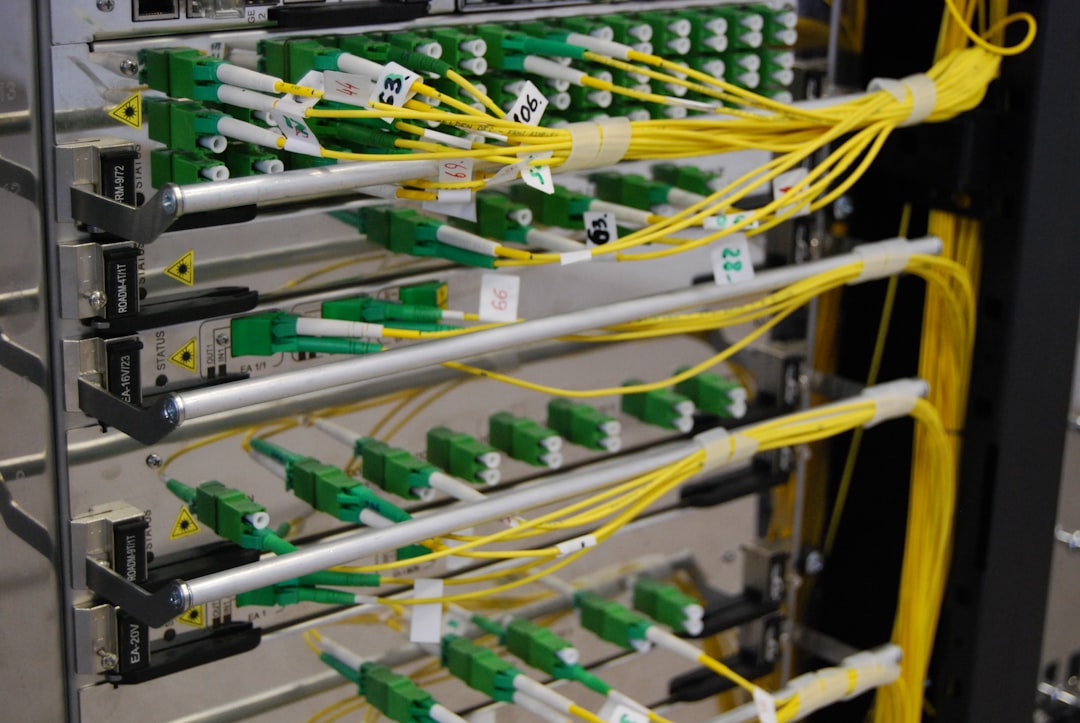
- SFP+ optical transceivers — Small modules that plug into SFP+ ports on switches and NICs. They connect via fiber optic cable and are good for runs over 3 meters. They’re immune to electromagnetic interference and support distances up to 100m on multimode fiber (or 10km on single-mode). You need matching transceivers on both ends.
- DAC (Direct Attach Cable) — Copper cable with SFP+ connectors permanently attached to both ends. No separate transceivers needed. Extremely cheap and reliable for short runs (typically 1-3 meters). Best for connecting devices in the same rack or adjacent rack.
- AOC (Active Optical Cable) — Similar form factor to DAC but uses fiber optic cable internally. Supports longer runs (up to 100m) without separate transceivers. More expensive than DAC but cheaper than buying transceiver pairs plus separate fiber patch cables.
For most home networks, the practical setup is: DAC cables for connections within your network rack (switch to server, switch to NAS), and SFP+ optical modules with fiber patch cables for runs between rooms or to distant access points.
For detailed guidance on when fiber beats copper for your specific situation, our cable type comparison guide covers the decision framework.
10Gtek SFP+ Modules — Best Overall Value
💰 Buy on Amazon → Mellanox
💰 Buy on Amazon → Moker
10Gtek offer the best balance of price, compatibility, and build quality for home lab use. At $10-20 per module, they’re cheaper than name-brand options from TRENDnet or Finisar while maintaining broad compatibility with major switch brands: Ubiquiti, MikroTik, Netgear, Supermicro, Mellanox, and most Cisco models that accept third-party optics.
10Gtek provides detailed compatibility lists on their Amazon listings and website. They also sell matching OM3/OM4 multimode fiber patch cables, so you can source your entire fiber link from one vendor and avoid finger-pointing if something doesn’t work. Each module is BER (Bit Error Rate) tested before shipping — not something you can assume at this price point from generic sellers.
For a best SFP transceivers DAC cables home network setup, pairing 10Gtek modules with OM3 fiber patch cables for inter-room runs and Moker DAC cables for rack connections covers both use cases affordably and reliably.
Moker DAC Cables — Best Value for Short Rack Runs
Moker DAC cables dominate the budget short-run category for good reason. At $8-15 for a 1-meter passive DAC, you’re getting a factory-terminated, tested direct attach cable that plugs into any standard SFP+ port. No compatibility concerns exist because DAC is an industry standard, not a vendor-specific implementation.
Build quality is perfectly adequate for home use. The cables are slightly stiffer than premium options from Cisco or Mellanox OEMs, which can make cable management in a dense rack slightly annoying. But for connecting a switch to a server or NAS that sits right next to it, the flexibility difference is irrelevant. Available in 0.5m, 1m, 2m, and 3m lengths — buy the shortest cable that reaches, since signal integrity degrades marginally with longer copper runs.
TRENDnet SFP+ Modules — The Safe, Branded Option
💰 Buy on Amazon → YuanLey
TRENDnet SFP+ transceivers are the “just works” choice for people who want a name brand they recognize. They’re explicitly compatible with TRENDnet switches (obviously) but also work reliably in Ubiquiti, MikroTik, Netgear, and most enterprise-grade switches that don’t enforce strict vendor lock-in on optics. At $15-25 per module, the brand premium over 10Gtek is modest.
Look for the TRENDnet TEG-MGBS10 (multimode, 10km rated at 850nm) or TEG-MGBS20 (single-mode, 20km at 1310nm). For home use, multimode is sufficient unless you’re connecting separate buildings. TRENDnet lists compatibility on the packaging and website, and their support team is actually responsive — a rarity at this price point where most brands offer zero support.
YuanLey SFP+ Modules — Budget Option for Bulk Purchases
YuanLey SFP+ transceivers sit below 10Gtek in price ($8-15 per module) with slightly less consistent quality control. They work in most switches, but compatibility is less predictable — if your switch is particularly picky about third-party optics (some Cisco and HP models), YuanLey is more likely to be rejected than 10Gtek or TRENDnet.
For common home lab switches — MikroTik CRS3xx series, Ubiquiti EdgeSwitch, Netgear managed switches — YuanLey modules work fine without issues. They’re the right choice when you’re buying 8-10 modules for a larger setup and the $5-10 per-module savings adds up to $50-100. Just buy one first to verify compatibility before committing to the full order.
Mellanox ConnectX NICs — The Best SFP+ Network Card
You need SFP+ ports to use SFP+ modules. If your motherboard or server doesn’t have them, the Mellanox ConnectX-3 or ConnectX-4 network cards are the gold standard for home 10GbE. Available on eBay for $15-40 used, these dual-port 10GbE cards are absurdly cheap for their performance level — enterprise gear that’s been decommissioned and is now perfect for home labs.
Mellanox cards have mature, well-tested drivers for Linux (native kernel support), Windows (official drivers), and macOS (with some caveats on recent versions). The ConnectX-3 supports SR (short range) transceivers and DAC cables natively without any configuration. Some units are OEM-branded (Dell, HP, Lenovo) — they work identically to retail Mellanox cards but may need a firmware flash to remove vendor locks.
Pair a used Mellanox ConnectX-3 with a 10Gtek or TRENDnet module and a short fiber run, and you’ve got 10GbE between rooms for under $50 total per link. That’s cheaper than most Cat6A runs of equivalent length.
Fiber Cable Recommendations
- Multimode OM3 or OM4 fiber for runs under 100m. OM3 is rated for 300m at 10Gbps, OM4 for 400m. For home use where runs rarely exceed 50m, either works perfectly. OM4 costs only slightly more and provides headroom.
- LC-LC duplex patch cables — this is the standard connector for virtually all SFP+ modules. Don’t buy SC-terminated cable and use adapters; get the correct LC connectors from the start.
- Label both ends of every cable — when you have multiple fiber runs between rooms, tracing them by process of elimination at 11pm during an outage is not fun. Use a label maker.
- Respect bend radius — fiber optic cable can’t make sharp turns. Don’t kink it around corners or cinch it tightly with zip ties. Use Velcro cable ties and gentle curves.
- Keep fiber and copper in separate cable paths when possible — the weight of copper bundles can crush fiber, and managing them separately makes future changes much easier.
Compatibility Pitfalls to Watch For
The single biggest headache in the SFP+ market is vendor lock-in on transceivers. Some switches — notably certain Cisco and HP enterprise models — reject third-party SFP+ modules entirely. They detect a non-OEM module and refuse to bring the port up. There’s no workaround except buying the manufacturer’s overpriced modules.
Thankfully, most switches aimed at prosumer and home lab use (Ubiquiti, MikroTik, Netgear ProSafe, Supermicro, and Mellanox) accept third-party optics without issues. If you’re buying a switch specifically for SFP+ connectivity, verify third-party compatibility on the manufacturer’s forums before purchasing.
Also note that some switches support SFP+ modules in SFP slots at reduced speed (1Gbps), but this isn’t universal. Don’t assume backward compatibility — check your specific hardware’s documentation.
Best SFP+ Transceivers and DAC Cables — Final Picks
💰 Buy on Amazon → 10Gtek SFP+ modules
For short rack-to-rack connections: Moker DAC cables at $8-15. For inter-room fiber runs: 10Gtek SFP+ modules with OM3/OM4 LC-LC patch cables. For network cards: Mellanox ConnectX-3 on eBay. This combination covers any home 10GbE deployment reliably and cheaply, and it’s exactly what most experienced home lab builders run.
Where to Buy SFP+ Modules Safely
The SFP+ market is flooded with counterfeits, particularly on Amazon and eBay. Modules labeled as Cisco, Intel, or Juniper are almost always fake when sold by third-party sellers. Instead, buy from reputable fiber networking specialists:
FiberStore is one of the largest direct-to-consumer fiber networking suppliers. They manufacture their own compatible modules, test every unit, and offer real warranty support. Their 10G SFP+ modules typically run $8-15 each — less than half what branded alternatives cost with no quality difference for home use.
10Gtek is another solid option for budget SFP+ modules and DAC cables. Their Amazon listings are genuine (they’re an actual manufacturer, not a reseller of counterfeits), and their direct website often has better prices.
ServetheHome’s SFP+ guide regularly covers SFP+ module compatibility and has extensive testing data showing that compatible modules perform identically to OEM-branded modules in virtually all scenarios.
Understanding DAC vs Optical
The choice between DAC (Direct Attach Cable) and optical SFP+ modules with fiber patch cables comes down to distance and cable management:
- DAC cables (passive or active): Best for connections under 3 meters. No modules needed — the connectors are integrated. Passive DACs draw zero power. Active DACs work up to 7 meters. Cost: $15-25 per cable.
- SFP+ modules + OM3/OM4 fiber: Best for 3-100 meter runs. Fiber is thinner, lighter, immune to EMI, and can bend around corners without signal loss. Modules cost $8-15 each, plus $5-20 for the fiber patch cable.
SmallNetBuilder’s fiber networking guide has excellent coverage of when to choose DAC versus optical for different home networking scenarios.
FS.com’s SFP+ compatibility list maintains a database of which modules work with which switches — invaluable when you’re trying to match modules to your specific switch model.
Troubleshooting SFP+ Connections
If a link won’t come up, check these in order: the switch port is configured for 10G (not auto-negotiating at 1G), the module is seated fully (push until it clicks), the fiber connectors are clean (use a fiber cleaning pen — a single speck of dust can kill a 10G link), and both ends match (SR for multimode, LR for single-mode, DAC for copper). The most common failure mode is dirty connectors followed by wrong module type for the cable.
SFP+ modules come in several form factors that aren’t interchangeable. SFP+ (enhanced small form-factor pluggable) supports up to 10 Gbps and is what most home users need. SFP28 supports 25 Gbps — overkill for home use but useful if you’re planning ahead. QSFP+ supports 40 Gbps and QSFP28 handles 100 Gbps, but these require different switch ports and are primarily enterprise equipment. When buying modules, double-check that you’re getting SFP+ and not SFP (which tops out at 1 Gbps) — they’re the same physical size but electrically incompatible, and vendors sometimes list them confusingly on product pages.
When building the best SFP transceivers DAC cables home network setup, always verify module compatibility with your specific switch model before purchasing.
The best SFP transceivers DAC cables home network configurations balance cost, distance, and reliability for consistent 10GbE performance throughout your home.
For homes running 10GbE, investing in quality fiber optics and direct-attach cabling ensures your backbone performs at wire speed for years to come. The difference between a $5 budget module and a $12 tested module is measurable in dropped packets during sustained transfers.
Do SFP+ transceivers need to match on both ends of a fiber link?
They should match in specification — same wavelength, same fiber type (multimode or single-mode), and same speed rating. They don’t need to be the same brand, but using identical modules from the same vendor on both ends is the safest approach and eliminates potential compatibility issues.
Can I use an SFP+ module in a regular SFP port?
Generally no. SFP+ modules are designed for 10Gbps operation and are keyed and calibrated differently. Some SFP+ modules will work in SFP slots at reduced 1Gbps speed, but this is not reliable across all hardware. Check your switch and module documentation.
How do I know if my switch supports third-party SFP+ modules?
Check the switch documentation, manufacturer’s website, or community forums. If the documentation doesn’t explicitly address third-party optics, search the model name plus “third party SFP” on forums. Ubiquiti, MikroTik, and Netgear prosumer switches generally accept them.
What’s the maximum distance for 10GbE SFP+ over multimode fiber?
Standard SR (Short Range) SFP+ modules support 300m on OM3 fiber and 400m on OM4 fiber at 10Gbps. For home networking, you’ll almost never exceed 100m, so distance is not a practical concern. For longer distances, single-mode modules reach 10km.
Are passive DAC cables really just copper wire with SFP+ connectors attached?
Essentially yes. Passive DACs are a straight copper assembly with SFP+ connector housings on each end. Active DACs include a small signal-conditioning chip to maintain signal integrity over slightly longer distances (up to 5-7 meters). For 1-3 meter runs, passive DACs work perfectly and are cheaper.
Frequently Asked Questions
Q: Can I mix SFP+ transceivers from different brands?
A: In most cases yes — SFP+ is a standardized format. However, some switches (especially Cisco and Dell) may reject third-party modules unless you disable vendor lock-in or use compatible modules from brands like FS.com that program their firmware to match.
Q: Is a DAC cable better than a transceiver with fiber?
A: For short runs under 3 meters, DAC cables are cheaper, simpler, and just as fast. For runs over 3 meters, active optical cables (AOCs) or transceivers with fiber are the way to go.
If you’re into networking gear jokes and geeky merch, check out Witty Design Finds on Etsy — some fun stuff for the home lab crowd.