AI and Home Automation: Smarter Living or Privacy Nightmare?
Your thermostat learns your schedule. Your security camera identifies faces. Your voice assistant predicts what you want before you finish asking. The smart home of 2026 is increasingly powered by artificial intelligence — and the promises are genuinely exciting. But so are the questions about what you’re giving up to get there. This guide covers ai home automation 2026 in depth.
AI home automation 2026 sits at the intersection of enormous convenience and genuine risk. The question isn’t whether AI makes your home smarter — it does. The question is what the trade-offs actually look like, who holds the data, and how you can get the benefits without surrendering your household’s privacy.
What AI Home Automation Actually Means in 2026
The phrase “AI home automation” gets used loosely. In 2026, it covers several distinct technologies that operate differently and have different privacy implications:
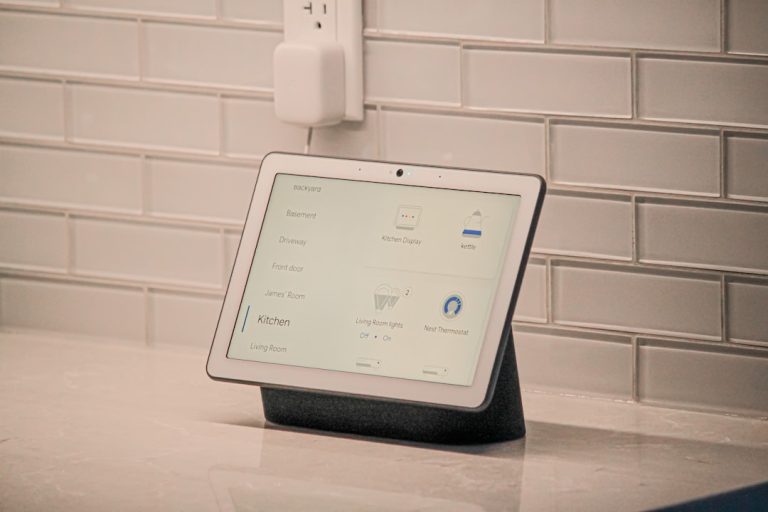
On-device AI — Machine learning models running locally on the device itself, without sending data to the cloud. The Google Nest Learning Thermostat uses on-device learning to build a schedule from your behavior. No cloud required for the intelligence.
Cloud AI — Data is sent to manufacturer servers, processed by large models, and results are returned. Amazon Alexa’s natural language understanding runs primarily in the cloud. More capable, but your conversation leaves your home.
Generative AI integration — LLMs integrated into home automation platforms, enabling natural language automation creation. Home Assistant’s AI integration features and OpenAI-backed implementations let you describe what you want in plain language and have the system build the automation.
Predictive automation — Systems that observe patterns and proactively suggest or implement automations. Samsung SmartThings AI Suggestions watch your manual behavior and suggest automating it.
Understanding which type of AI is in your device matters enormously for both privacy and functionality. AI home automation 2026 encompasses all of these, and a thoughtful setup uses them selectively.
The Smarter Living Case: What AI Actually Delivers
Let’s start with what works, because it genuinely works well.
Adaptive Comfort
Google’s Nest Learning Thermostat exemplifies adaptive comfort done right. Over a week of use, it learns when you’re home, when you sleep, what temperatures you prefer, and adjusts automatically without you building a manual schedule. Studies have shown Nest users save an average of 10–12% on heating bills and 15% on cooling compared to manual schedules. That’s a real, measurable benefit.
Ecobee’s SmartThermostat Premium goes further with room sensors that detect occupancy and adjust room-by-room. Its AI learns which rooms are occupied at what times and routes comfort accordingly. The on-board microphone serves as an Alexa endpoint, which is where privacy questions enter.
Predictive Presence and Lighting
AI lighting systems like Caséta by Lutron paired with occupancy sensors and time-of-day learning can make your home feel genuinely responsive. Lights come on as you approach a room, dim when you settle in, and turn off when you leave — without a single manual trigger.
In 2026, several systems now support “anticipatory” lighting: if your calendar shows a meeting starting at 9 AM, the system pre-adjusts lighting to your focus-work preference 10 minutes before.
Security Intelligence
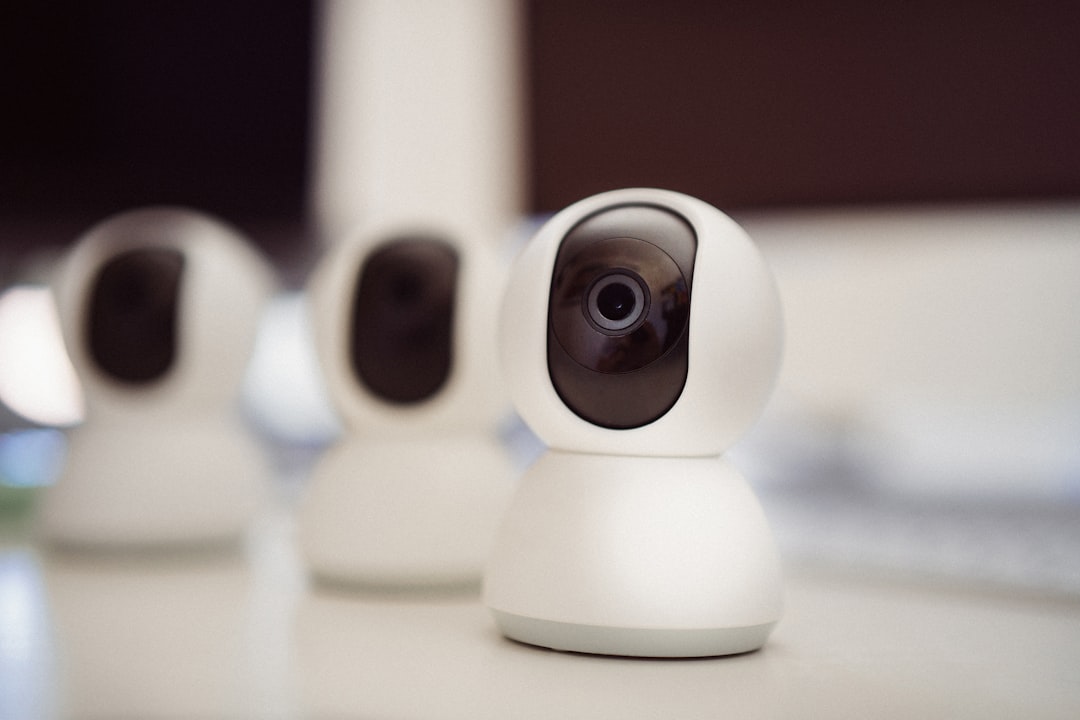
AI-powered cameras like the Arlo Ultra 2 and Nest Cam with Floodlight don’t just detect motion — they classify it. A person, a car, a package, an animal. Alerts are dramatically more useful when you know a person is at the door versus a squirrel in the yard. Face recognition goes further: trusted household members don’t trigger alerts; unrecognized faces do.
This is compelling security functionality. It’s also where AI home automation 2026 privacy concerns are most acute.
The Privacy Nightmare Case: What You’re Actually Giving Up
Here’s where the conversation gets harder.
Your Home Is a Data Source
Every AI-powered device is learning from your behavior. That learning requires data. The question is where that data goes and who can access it.
A 2023 Mozilla Foundation study found that 25 of 31 smart home devices could share or sell your data, most had weak data security practices, and 15 collected more data than necessary for their stated function. The situation has improved slightly in 2026 with the EU’s AI Act and FTC scrutiny of smart home data practices — but the fundamental business model of many manufacturers is data collection.
Amazon’s Alexa stores voice recordings by default. You can delete them, but they’re used to train models until you do. The opt-out exists — it just requires finding it first, which is not an accident. Ring cameras (an Amazon company) have a documented history of sharing footage with law enforcement without user consent until policy changes forced them to stop. Their current policy requires a warrant — but that required sustained public and regulatory pressure to achieve.
Voice and Always-On Audio
Smart speakers with AI assistants are “always listening” for wake words. The tech is designed to activate only on the wake word, but false activations do occur — meaning your device occasionally captures and transmits audio it wasn’t supposed to. EFF’s analysis of smart home privacy found that false activation rates, while low, still resulted in thousands of unintended recordings per device over a year.
Local voice processing alternatives exist. Mycroft AI (discontinued) and Home Assistant’s Whisper integration offer fully local voice command processing — nothing leaves your home. The trade-off is accuracy: cloud-processed voice understanding is still better than local models, though the gap is closing.
Facial Recognition in Your Home
Face recognition is powerful. It’s also one of the most sensitive categories of biometric data. When your doorbell camera identifies your face and logs your comings and goings — and that data lives on a company’s server — you have limited control over how it’s used, who can access it (including law enforcement), and what happens if the company is acquired or breached.
California’s BIPA-adjacent biometric laws and Illinois’ BIPA have pushed some manufacturers toward requiring explicit consent for facial recognition features. In the EU, GDPR gives you the right to access and delete biometric data. But enforcement is inconsistent, and most users don’t read the terms when setting up a new camera.
AI Home Automation 2026: Balancing Benefits and Risks
You don’t have to choose between AI-powered convenience and privacy. You can have both — with the right choices.
Prioritize On-Device AI
The single most effective privacy choice is preferring devices that process AI locally. On-device AI means:
– Data never leaves your home
– Processing doesn’t depend on cloud connectivity
– Manufacturer shutdowns don’t affect functionality
– No risk of data breach at the cloud level
The Apple HomePod mini processes Siri requests locally for most home automation commands. Apple’s privacy-by-design approach means Siri requests for HomeKit devices don’t go to Apple servers. When local processing covers your use case, it’s the right default choice.
Use Home Assistant as a Local AI Hub
Home Assistant’s AI integration layer in 2026 includes local LLM support via Ollama, local speech-to-text via Whisper, and local text-to-speech via Piper. A capable mini PC like the Beelink EQ12 running Home Assistant with a small Ollama model gives you conversational automation control that never touches the internet.
For a full walkthrough of Home Assistant vs cloud-dependent platforms, see our Home Assistant vs SmartThings comparison.
Segment Your Network
AI devices that must use cloud services should live on an IoT VLAN, segmented from your primary network. Think of a VLAN like a bouncer at the door — your smart speaker gets its own section of the party and can’t wander over to where your laptops and NAS live. A capable router running pfSense or OPNsense makes this simple — see our pfSense vs OPNsense guide for setup details.
Read the Privacy Settings and Actually Use Them
Most AI home devices ship with maximum data sharing enabled. Within every app:
– Disable voice recording storage (or enable auto-delete after 3 months)
– Opt out of “improve our products” data sharing
– Disable facial recognition unless you’ve evaluated the trade-off
– Disable personalized ads in any smart TV or display settings
These don’t make cloud devices privacy-perfect, but they reduce the exposure meaningfully.
The Regulation Landscape in 2026
AI home automation 2026 operates in a rapidly shifting regulatory environment.
The EU AI Act, effective 2025-2026, classifies certain AI uses in private spaces as “high risk” requiring enhanced oversight. Biometric identification systems specifically face strict requirements. For US consumers, FTC enforcement actions against deceptive data practices have increased, and several states have passed smart home-specific privacy laws.
The Matter standard includes data minimization principles in its specification — devices should collect only what’s needed for function. As Matter adoption increases, it creates a structural incentive toward better data practices, even if it doesn’t mandate them outright.
Practical AI Home Automation Setup for 2026
If you want the benefits of AI home automation 2026 while managing privacy risk, here’s a practical framework:
Tier 1 — High trust, high AI use: Thermostat learning (Nest, Ecobee), local lighting scenes, presence-based automations. These use behavioral data in ways that stay on-device or are low-sensitivity.
Tier 2 — Medium trust, selective AI use: Smart speakers (configure data deletion, use wake-word only), AI cameras without cloud face recognition, generative AI for automation creation (with a local LLM if possible).
Tier 3 — High scrutiny, limit AI use: Always-on microphones in bedrooms, cloud-based face recognition databases, devices from manufacturers with poor privacy track records, AI features that require account creation with third-party data brokers.
For hub and networking options that support local AI, see our best smart home hub guide and best mesh WiFi systems — the right network infrastructure makes local processing far more practical.
Frequently Asked Questions
Does AI home automation in 2026 require a cloud connection?
Not necessarily. On-device AI in thermostats, local LLMs via Home Assistant with Ollama, and local voice processing via Whisper all work without cloud connectivity. However, most consumer AI features — Alexa voice understanding, Nest camera object recognition, Google Home routines — require cloud connectivity.
Can AI home automation listen to my conversations?
Smart speakers listen for wake words constantly. False activations do occur, meaning snippets of non-wake-word audio can be captured. If this concerns you, use devices with physical mute switches (most high-end smart speakers have them) and enable auto-deletion of voice recordings. Home Assistant with local Whisper processes voice completely locally. Your smart speaker will never know about the 11pm conversation you had about replacing it.
Is facial recognition in my home safe?
The biometric data itself is sensitive and powerful. The risk depends on where it’s stored (local vs. cloud), who can access it, and the manufacturer’s law enforcement cooperation policies. If you use cloud-based facial recognition, understand that your biometric data lives on a third-party server.
How do I know if my AI devices are sending data?
Network monitoring tools like Pi-hole or a router with traffic logging can show you what IPs your devices communicate with. Tools like Wireshark let you inspect packets if you’re technically comfortable. If a device is talking to unexpected domains, that’s worth investigating.
Will AI home automation get better at privacy protection?
The trajectory is positive but slow. Regulation (EU AI Act, state-level US laws), improving local AI hardware, and consumer pressure are all pushing toward better privacy. On-device AI models are improving rapidly — within 2–3 years, most inference that currently requires cloud compute will be doable on modest local hardware.
Is Home Assistant the best option for privacy-focused AI home automation?
For technical users, yes. Home Assistant with local integrations gives you AI-powered automation with no mandatory cloud dependency. The trade-off is a steeper setup curve compared to Alexa or Google Home. For non-technical households, Apple’s HomeKit ecosystem offers the best privacy protections among cloud-connected consumer platforms.